Wedding Flowers Crouch End Case Study Before and After
Posted on 12/10/2026
If you are comparing wedding flower ideas in Crouch End, a before-and-after case study is one of the most useful ways to see what actually changes the feel of a day. Not just "pretty flowers", but the difference between a room that feels a bit unfinished and a venue that suddenly looks intentional, polished, and quietly memorable. This Wedding Flowers Crouch End Case Study Before and After guide breaks down what changes, why it matters, and how to plan wedding florals that suit your venue, budget, and style without the usual stress. Truth be told, flowers can make a bigger visual difference than many couples expect.
In the sections below, you will find practical guidance, a clear step-by-step process, common mistakes to avoid, and a realistic example of how a floral brief can shift from basic to beautiful. We will also cover what to check before ordering, how to choose the right arrangements for a London wedding, and where the smartest decisions usually happen. Little details matter here. A lot.
Why Wedding Flowers Crouch End Case Study Before and After Matters
Wedding flowers are often judged too quickly. People look at a bouquet or a centrepiece in isolation and think that is the whole story. It is not. The real value shows up when you compare the room before and after the flowers are installed. That comparison tells you whether the design works with the venue, the lighting, the table shape, the dress style, and the mood you want guests to feel the second they walk in.
For couples planning a wedding in Crouch End, this matters even more because local venues can vary a lot. You might be dealing with a bright community hall, a restaurant space, a small intimate room, or a character venue with plenty of personality already. The flowers need to work with what is already there, not fight it. A good before-and-after example helps you see the transformation in context, which is much more useful than staring at a single bouquet photo.
There is also a trust angle. A florist who can show a thoughtful transformation usually understands proportion, seasonality, colour balance, and installation planning. That does not mean everything must be dramatic. Sometimes the best result is subtle. But subtle still has to be designed. Otherwise it just looks like flowers were placed somewhere and hoped for the best.
Expert summary: the strongest wedding flower results come from matching scale, colour, and placement to the venue first, then layering in the couple's style. Pretty is good. Fit is better.
How Wedding Flowers Crouch End Case Study Before and After Works
A before-and-after case study for wedding flowers usually follows a simple pattern: assess the space, define the brief, choose the palette and arrangement types, then compare the venue before setup and after installation. That sounds obvious, but the value is in the detail. A flat-looking room can be transformed with only a few well-placed arrangements if the design is considered properly.
The "before" stage is about identifying the blank canvas. What does the venue look like with no flowers? Is there already strong decor? Are the tables narrow or wide? Is the ceiling low, which can make tall arrangements feel cramped? Are there dark corners that need softening? These practical questions matter more than simply picking a favourite flower.
The "after" stage is where the design is tested in the real world. Do the flowers frame the ceremony area? Do the table arrangements allow conversation? Do the bouquets photograph well in daylight and under indoor lighting? If the answer is yes, the design has done its job.
One thing many couples notice only once they see the final setup is how much flowers influence movement. Guests naturally look toward the focal points first. A good floral plan guides the eye without shouting. That is why a before-and-after format is so helpful: it shows the visual journey rather than a single isolated product shot.
Key Benefits and Practical Advantages
The clearest benefit is confidence. When you can compare before and after, you can see whether the design direction is actually working. That reduces second-guessing, which is especially handy when wedding planning starts feeling like six decisions too many all at once.
Other benefits include:
- Better budgeting: you can judge where impact is coming from, so you do not overspend on unnecessary extras.
- Stronger styling: the transformation makes it easier to spot which elements create the biggest visual lift.
- Venue awareness: you see how flowers change the atmosphere of a specific Crouch End setting, not just a mood board.
- Clearer communication: it is easier to brief a florist when you can point to the exact kind of transformation you want.
- More realistic expectations: you learn what flowers can do, and what they cannot do. Helpful, that.
There is also a practical planning advantage. Once you know what type of transformation you want, you can decide whether to focus on ceremony arrangements, bouquets, centrepieces, entrance flowers, aisle details, or table styling. You do not always need all of them. Sometimes a few targeted pieces produce the best result, especially for smaller London weddings where space is tight.
Who This Is For and When It Makes Sense
This approach makes sense for couples who want more than a generic wedding flower list. If you care about how your venue feels on the day, and you want a clearer idea of where the money goes, a before-and-after case study is genuinely useful.
It is particularly helpful if you are:
- getting married in Crouch End or nearby North London
- working with a modest or flexible floral budget
- planning a venue that needs styling, not total reinvention
- trying to decide between simple arrangements and a fuller floral look
- choosing between seasonal flowers and a specific colour scheme
- not sure how much wedding flowers should cover the room
It also suits couples who are visual decision-makers. Some people can look at a spreadsheet and be done. Others need to see the room transform. If you are in the second camp, you are in good company.
For florists and planners, before-and-after presentation is useful too. It demonstrates process, not just products. And in wedding work, process is the bit that saves the day when timing gets tight, stairs appear, or the venue manager says, "just so you know, you can only set up from 11:15".
Step-by-Step Guidance
Here is a practical way to approach wedding flowers in Crouch End if you want a clean transformation and fewer surprises.
1. Start with the venue reality
Do not begin with flower names. Begin with the room. Look at the lighting, the furniture, the ceiling height, and the ceremony layout. A bouquet that looks luxurious in one setting might disappear in another. Similarly, a big centrepiece can feel elegant in one room and overwhelming in a smaller venue.
2. Decide the main purpose of the flowers
Are the flowers mainly for photographs, for guest tables, for the ceremony backdrop, or for all three? If you know the job the flowers need to do, it becomes much easier to decide where to spend. A wedding flower plan with a clear job is usually stronger than one that simply tries to cover everything.
3. Choose a palette that suits the setting
Colour is not decoration alone; it changes the atmosphere. Whites and creams feel calm and refined. Pinks and blush tones feel romantic. Reds can feel rich and traditional. Mixed tones can feel lively and modern. If your venue already has strong colours or wood tones, you may want a palette that complements rather than competes.
4. Match the arrangement style to the table or space
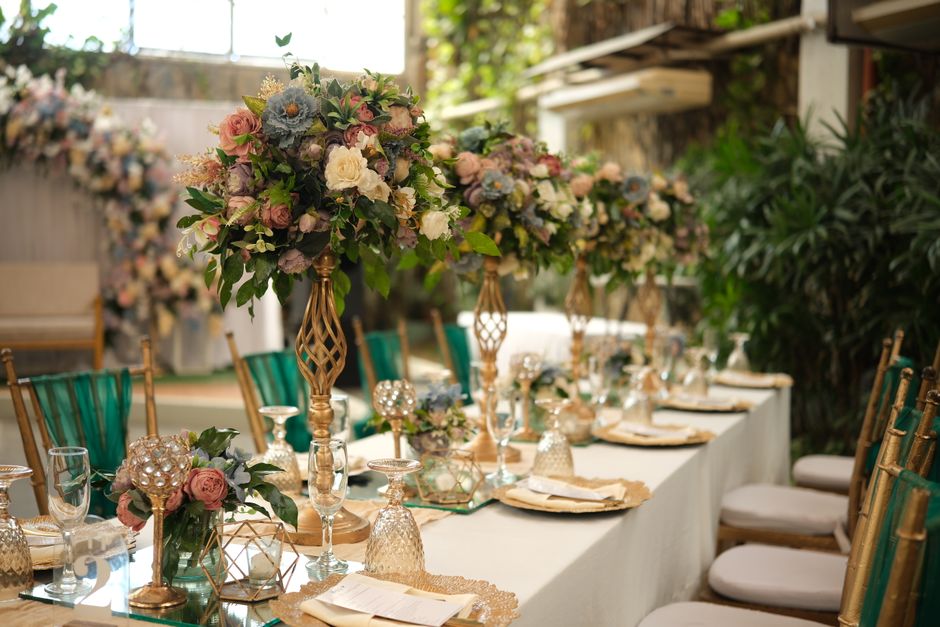
Long tables often suit lower, more linear designs. Round tables may take slightly fuller centrepieces. Ceremony spaces usually need one focal point rather than several competing features. This is where a florist's experience matters, because scale is everything. Really. Scale is everything.
5. Review the setup from a guest's viewpoint
Stand where people will stand. Sit where they will sit. Look at the arrangement at eye level. Can people talk across the table? Does the bouquet block the ceremony view? Does the entrance arrangement make the first impression you want? Small practical checks like these can save a lot of regret later.
6. Confirm delivery and installation timing
For wedding flowers, timing is a quiet make-or-break factor. Flowers need to arrive fresh, be conditioned properly, and be installed at the right moment. In London, travel time and venue access can affect everything. A good plan allows a little breathing room. Not too much, but enough.
7. Photograph before and after
If you are creating a case study, take the "before" images before any decor is placed. Then take the "after" shots once the arrangements are fully styled. Use similar angles if possible. That is what makes the transformation easy to understand. It also gives you a more honest view of what changed.
Expert Tips for Better Results
In our experience, the best wedding flower results come from restraint as much as from abundance. A few strong design decisions often beat a crowded, overcomplicated mix. That can be a hard lesson, because weddings make people want to add just one more thing. Then another. Then, well, suddenly the table is speaking too loudly.
Here are the tips that matter most:
- Use one strong focal point per zone. Ceremony, dining, and entrance spaces each need their own job.
- Let the venue breathe. Empty space is not failure. It gives the flowers room to look intentional.
- Choose blooms with support from foliage. Structure helps arrangements hold shape and photograph better.
- Think about scent. Some flowers are beautifully fragrant, but not every guest loves a strong perfume near the dining table.
- Plan for the season. Seasonal flowers often feel more natural and can be easier to source in good condition.
- Ask to see scale references. A bouquet can look different in a hand than on a long banquet table.
A useful mental test is this: if the flowers were removed, would the room feel bare? If the answer is yes, then the flowers are doing real styling work. If the answer is no, the design may be overloading the space or repeating what the venue already does well.
And yes, photos lie a bit. Not intentionally. They just flatten depth. So always ask what something looks like in person, under real light, with real people moving around it.
Common Mistakes to Avoid
Wedding flowers are one of those areas where small errors show up very clearly on the day. The good news is that most of them are avoidable if you spot them early.
- Choosing flowers before confirming the venue layout. The room should guide the design, not the other way round.
- Ignoring scale. Tiny arrangements in a large room can look lost, while oversized pieces in a tight room can feel awkward.
- Mixing too many colours. More colour is not always more impact. Sometimes it just becomes busy.
- Forgetting table use. Guests need space for plates, glasses, and conversation. This is not just a display.
- Leaving the booking too late. Good wedding florists need time to plan, source, and schedule properly.
- Not checking access at the venue. Narrow stairs, limited loading space, and short setup windows can all affect delivery.
Another common issue is thinking every flower element must match exactly. It does not. Cohesion matters more than uniformity. A bridal bouquet, bridesmaid bouquet, buttonholes, and table flowers can all work together while still having slight differences in shape and intensity.
That little bit of variation often makes the whole design feel more alive. A bit human, even.
Tools, Resources and Recommendations
You do not need a complicated toolkit to plan wedding flowers well, but a few simple resources can make the process much smoother.
- Venue photos: use real pictures of the actual room, ideally from multiple angles and times of day.
- Colour references: save examples of tones you like, including dress fabric, invitation design, and table styling.
- Guest list notes: useful for understanding table count, layout, and how many focal points you need.
- Seasonal inspiration: helps you keep expectations realistic and design choices grounded.
- Florist product pages: helpful for comparing arrangements, bouquet styles, and matching items.
If you are browsing a local florist website, it can help to look at broader wedding-specific pages as well as individual pieces. For example, the wedding flowers in Crouch End page is a useful starting point for understanding the local style options, while wedding collections can help you compare ranges more efficiently. If you are looking for ceremony and bridal pieces specifically, bridal bouquets and buttonholes are worth checking alongside table arrangements.
For a more polished overall look, it can also be useful to explore the broader design language on the site, such as luxury flowers and flowers in a vase. Those pages are not wedding-specific, but they can help you spot the florist's general style, which is often a good clue. You want consistency. You really do.
Law, Compliance, Standards, or Best Practice
For wedding flowers, the main compliance concerns are practical rather than heavily regulated. Still, best practice matters. Florists should handle flowers safely, keep arrangements fresh, and transport them in a way that avoids damage. If candles, stands, or large installations are involved, venue rules and fire safety expectations may also come into play. That is usually something to confirm directly with the venue and florist in advance.
In the UK, wedding businesses are also expected to be clear about ordering, delivery, cancellations, and refunds. You should always review terms before confirming an order, especially for event work that depends on a specific date and setup window. If you are unsure what is included, ask. A straightforward florist will not mind. In fact, good ones prefer it.
It is also sensible to consider accessibility. If the venue has narrow entrances, limited lift access, or step-free restrictions, the floral plan should account for that. This is not just about convenience; it can affect whether larger arrangements can be delivered safely and on time.
For a sense of the business standards behind the service, you can also review the florist's delivery information, returns and refund policy, terms and conditions, and guarantees. These pages help set expectations, which is especially useful for time-sensitive wedding orders.
Options, Methods, or Comparison Table
Not every wedding needs the same floral approach. Sometimes a few well-chosen pieces are enough. Other times, the full scheme makes sense. Here is a simple comparison to help you think it through.
| Approach | Best For | Strength | Possible Trade-Off |
|---|---|---|---|
| Minimal styling | Small ceremonies, tighter budgets, modern venues | Clean, unfussy, cost-aware | Can feel too plain if the venue is very bare |
| Focused statement pieces | Couples wanting high impact in key spots | Strong visual transformation where it matters most | Needs careful placement to avoid looking sparse elsewhere |
| Full floral styling | Couples wanting a highly cohesive look across the day | Most immersive before-and-after change | Higher cost and more planning time |
| Seasonal-led design | Readers who want a natural, easy-to-source feel | Usually looks fresh and coherent | Limits exact flower control if you want a very specific bloom |
If you are unsure which method suits you, start with the venue and your guest count. Then work backwards. That alone clears up a surprising amount of confusion.
Case Study or Real-World Example
Here is a realistic example of how a before-and-after floral brief might be approached for a Crouch End wedding. This is a practical illustration rather than a claim about a specific event.
Before: a simple function room with plain tables, neutral walls, basic lighting, and little visual softness. The space is perfectly serviceable, but it does not yet feel like a wedding. The ceremony area is defined, but not especially memorable. Guests would probably describe it as "nice" and move on.
Brief: create a warm, romantic look without overcrowding the room. The couple wants something elegant, not fussy, with a soft palette and a few noticeable focal points for photographs.
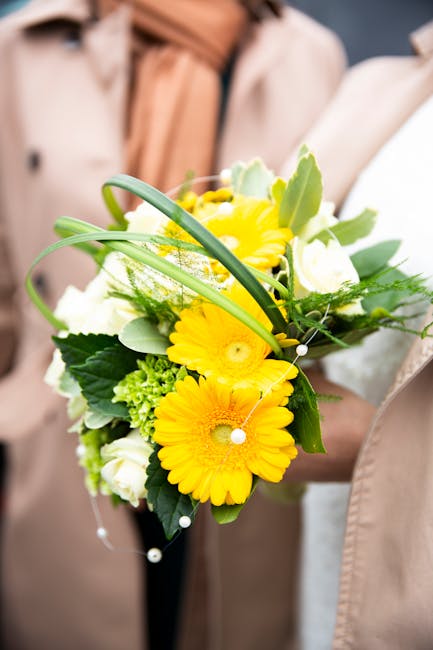
After: a bridal bouquet with structure and gentle colour contrast, bridesmaid bouquets that echo the same tones at a slightly lighter intensity, buttonholes that tie the wedding party together, and low table arrangements that add shape without blocking conversation. The ceremony area is framed with one stronger floral feature, and the entrance gets a smaller matching arrangement so the first impression feels intentional.
The difference is not just "more flowers". The room now has rhythm. The eye moves from entrance to ceremony to tables without getting stuck. Guests notice the setting immediately, but not in a shouty way. And that is often the sweet spot.
One of the biggest shifts in this kind of case study is emotional, not just visual. Before, the room is a venue. After, it feels like a celebration. There is a soft lift in the atmosphere. People lower their voices a little, smile more, and start taking photos before they even sit down. That happens more often than you might think.
Practical Checklist
Use this checklist before finalising your wedding flower plan.
- Confirm the venue layout and any access restrictions
- Decide which parts of the day need flowers most
- Choose a colour palette that suits the venue and season
- Check bouquet sizes against dress style and photo plans
- Make sure centrepieces leave enough table space
- Confirm delivery timing and setup window
- Review the florist's terms, refund policy, and guarantees
- Ask how substitutions are handled if a flower is unavailable
- Consider whether the design needs fragrance or should stay subtle
- Take before photos if you want to document the transformation
If you can tick those off, you are already ahead of most last-minute wedding flower planning. Honestly, that alone can save a lot of stress.
Conclusion
A Wedding Flowers Crouch End Case Study Before and After is useful because it turns flower planning from guesswork into something you can evaluate properly. It shows how a room changes, how a budget is being used, and how a florist thinks about scale, placement, and atmosphere. That makes it much easier to choose arrangements that feel right on the day, not just in a photo.
The best results usually come from a simple approach: understand the venue, pick a clear purpose for the flowers, keep the palette coherent, and let the design support the day rather than overpower it. If you do that, the transformation can be quietly brilliant. Not loud. Not forced. Just beautifully right.
Get a free quote today and see how much you can save.
Frequently Asked Questions
What does a wedding flowers before-and-after case study actually show?
It shows the change between the untouched venue and the fully styled space, so you can see how flowers affect atmosphere, scale, and visual balance.
Why is this useful for weddings in Crouch End?
Crouch End venues can vary a lot in size and style, so seeing a real transformation helps you understand what works in a specific local setting.
Do I need a full floral package to make a venue look good?
Not always. A few well-placed statement pieces can create a strong result if the venue already has character or good decor.
How far in advance should wedding flowers be booked?
As early as possible, especially if your date is in a busy season or you want a particular style, flower mix, or installation timing.
What flowers are best for a wedding transformation?
The best flowers depend on season, venue, and palette. In many cases, structure and colour harmony matter more than the exact flower type.
How do I know if the arrangement is too big or too small?
Look at the venue layout and table size. A good florist will balance proportion so the flowers feel present without blocking movement or conversation.
Can I match my bridal bouquet to the rest of the room?
Yes, and that usually works well. The bouquet should complement the wider design without being an exact copy of every arrangement.
Are seasonal flowers better for wedding styling?
Often, yes. Seasonal flowers are usually easier to source in good condition and can make the design feel more natural and cohesive.
What should I ask a florist before placing an order?
Ask about delivery, setup, substitutions, bouquet sizing, venue access, and what happens if a flower is unavailable near the date.
How do I compare wedding flower options without getting overwhelmed?
Start with the venue, then decide what role the flowers need to play. That narrows the choices quickly and keeps the design focused.
Is it worth using before-and-after photos when planning my wedding flowers?
Yes. They make it much easier to judge impact, understand scale, and explain your preferences to the florist.
Where can I look for related wedding flower styles on the site?
You can browse the local wedding flowers page, compare bridal bouquets, explore table arrangements, and review the broader wedding collection for ideas.
In the end, the best floral plans are the ones that feel calm on the day and lovely in the room. That is the real win.